
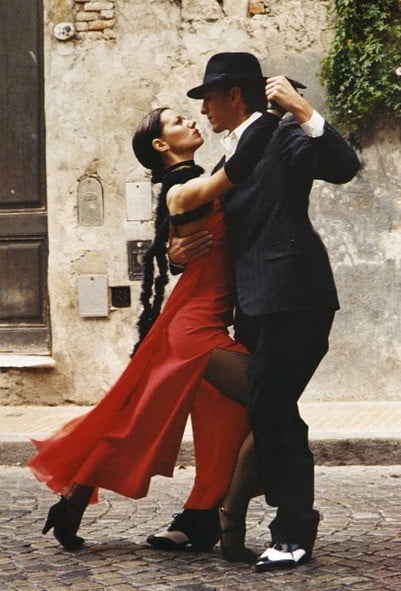
Pareja de bailarines de tango
El tango es un género y danza musical. Tiene las características de la región del Río de la Plata y sus áreas influenciadas. Se distribuye principalmente en Buenos Aires (Argentina) y Montevideo (Uruguay). El escritor Ernesto Sabato enfatizó el estado «híbrido» del tango.
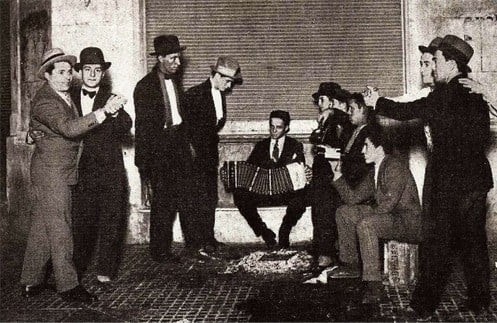
Grupo de hombres bailando tango en la vereda, alrededor de 1910. En los comienzos, el tango era un baile de hombres.
El poeta Eduardo Giorlandini destacó su linaje afro-río de la Plata, que es de la cultura gauchesca, hispana, africana, italiana y la gran diversidad étnica en la ola de inmigración, principalmente de Europa. La investigadora Beatriz Crisorio dijo: «El tango debe contribuciones multiétnicas debido a nuestra historia colonial (indígenas, africano y criollo) y posteriores contribuciones de inmigrantes».
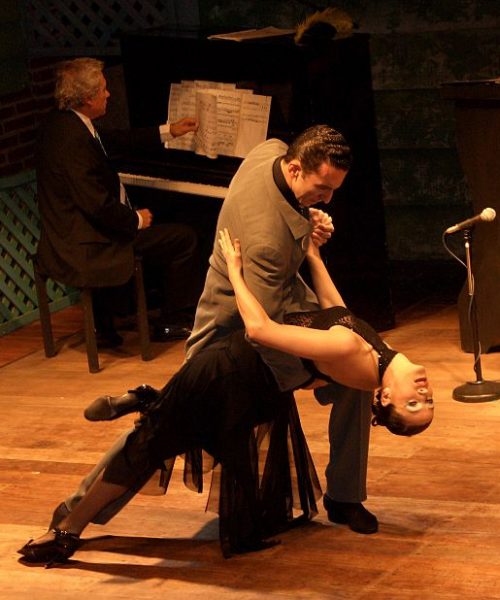
Los shows de tango son muy reconocidos tanto en el país como en el mundo
Desde entonces, ha sido uno de los géneros musicales, cuya existencia ha sido ampliamente conocida en todo el mundo, y también es el más famoso. Diferentes encuestas muestran que los seis estilos musicales principales han dejado su huella en la música de tango: música de tango andaluz, música cubana habanera, candombe, milonga, mazurca y música de polka europea.
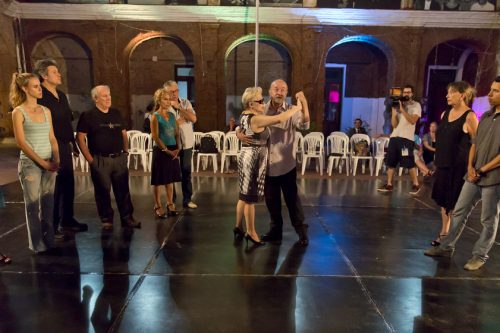
Las clases de tango atraen tanto a locales como turistas
El tango ha revolucionado el baile popular al presentar el baile sensual con abrazos de pareja, proponiendo una relación emocional profunda entre el cuerpo de cada persona y el bailarín. Con respecto a esta relación, Enrique Santos Discépolo, es uno de sus mejores poetas, definió el tango como «un pensamiento triste, que se baila».
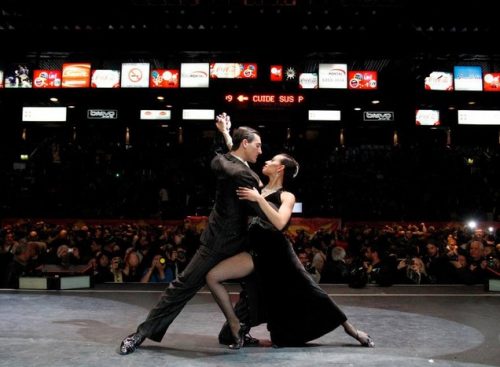
El Campeonato Mundial de Tango reúne a parejas de todo el mundo
En 1916 el inmigrante uruguayo Francisco Canaro da forma en Buenos Aires a una orquesta típica con estructura de sexteto (dos bandoneones, dos violines, piano y contrabajo) e instrumentistas de primer nivel: José Martínez (piano), Osvaldo Fresedo y Pedro Polito (bandoneones), Rafael Rinaldi (violín) y Leopoldo Thompson (contrabajo). Esta integración establecerá la instrumentación típica del tango por décadas y será quien forme las primeras grandes orquestas. Canaro, quien era además un compositor prolífico, será la primera gran estrella del tango y el primero en ser contratado para las fiestas de la clase alta.
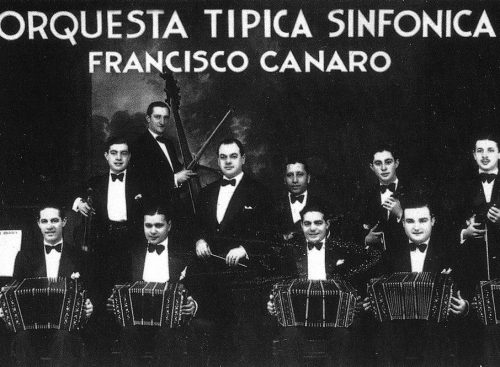
La Orquesta de Francisco Canaro
Musicalmente, generalmente tiene una forma binaria (tema y coro) o una forma ternaria (con la adición de dos partes de un trío). Sus actuaciones se pueden realizar en una variedad de formas de instrumentos musicales, incluida la orquesta clásica de la orquesta y la sexta de dos bandeones, dos violines, piano y cuarteto de contrabajo; y el bandoneón ocupa exclusivamente la posición central. Las letras de muchas de sus canciones están escritas en el idioma local del rioplatense, el lunfardo, generalmente expresando las emociones y la tristeza de los hombres y mujeres de la ciudad, especialmente «cosas de amor».
El 30 de septiembre de 2009, a pedido de las ciudades de Buenos Aires y Montevideo, la UNESCO lo declaró Patrimonio Cultural Inmaterial Humano (PCI).
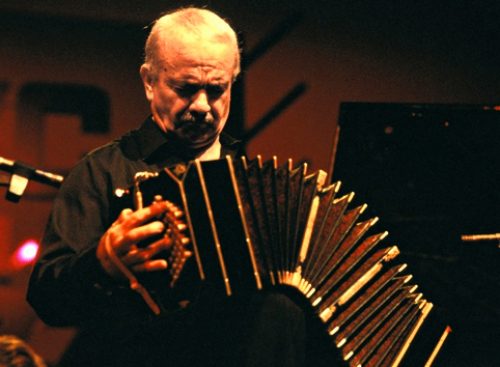
Ástor Piazzolla
El concepto de tango es característico de algunas ciudades de Argentina y Uruguay que tienen puertos interiores como ciudades. Estas ciudades tienen como eje a Río de la Plata. Buenos Aires y Montevideo son las capitales de los dos países. Pero luego se expandió a otras ciudades. El puerto fluvial de la zona, donde se destaca Rosario, es una ciudad en la provincia de Santa Fe en Argentina.
Existen varios estudios destinados a determinar la ubicación geográfica exacta donde aparece el tango. Algunas fuentes insistieron en que apareció por primera vez en Buenos Aires, otras aparecieron en los suburbios, incluso en Montevideo e incluso en Rosario. Ciudades cercanas a Buenos Aires, como Avellaneda y Sarandí, forman los suburbios llamados Barracas al Sud, y también tienen un antiguo fondo de tango.
El concepto de tango no solo entre decenas de miles de inmigrantes ingresó a las ciudades portuarias de Argentina y Uruguay entre 1850 y 1930, sino también a los centros de exportación de los modelos económicos agrícolas, ganaderos y de exportación de los dos países. Se organizaron en la segunda mitad del siglo XIX.
Aunque su origen todavía causó controversia en la mesa de café de sus tangueros, su reputación y reconocimiento internacional no han sido discutidos. Como cualquier expresión artística real, el Tango ha descubierto nuestro inagotable reino de la humanidad y ha demostrado el espíritu de Buenos Aires. Quizás por este hecho, vive en los barrios de Buenos Aires y en las academias japonesas, las calles de París y el centro cultural de Nueva York.
El baile de tango se basa en cuatro componentes básicos: el brazo estrecho, la caminata, el corte y la quebrada, entendiendo los dos últimos términos clásicos como ejes de improvisación y figuras coreográficas de danzas decorativas, y es conocido por su nombre común «firulete». Pero lo más importante es que el tango debe bailar como un lenguaje corporal a través del cual las emociones personales se transfieren a la pareja.
Se dice que el baile de tango «escucha el cuerpo del otro». En el baile, la pareja debe hacer figuras, pausas y movimientos llamados «cortes, quebradas y firuletes», pero para ellos, todos deben ser diferentes y no soltarse. En el abrazo el que hace difícil combinar la improvisación de los dos en una coreografía.
La coreografía diseñada desde los brazos de la pareja es muy emotiva y compleja. La complejidad de los pasos no te hace expresar o expresar el mensaje que quieres transmitir en el baile. Es expresar un sentimiento lleno de sensualidad en lugar de sexo, cuyo objetivo principal no son solo los pasos o las posturas que pisan los bailarines. Cuando la expresión facial del bailarín no puede transmitir la sensación, la técnica perfecta o el momento perfecto son inútiles. Todo en el baile de tango está unificado, y cada movimiento de apariencia, brazos, manos y cuerpo está acompañado por el ritmo del tango y todo lo experimentado: tres minutos de romance, dos personas pueden simplemente conocerse, la realidad, puede que no haya relación en la vida.
El baile de tango trasciende los corazones de los bailarines, gracias a sus sentimientos de baile y la calidad de la coreografía. Cada festival de música, cada párrafo, cada tango tiene momentos diferentes, no puedes bailar un tango completo de la misma manera que toda la melodía. Hay ritmos tristes, felices, sensuales o eufóricos, finales silenciosos o grandiosos, música progresiva o música debilitada, solo expresa sensaciones, y estas son las sensaciones que los bailarines transmiten a sus pies y cuerpo.
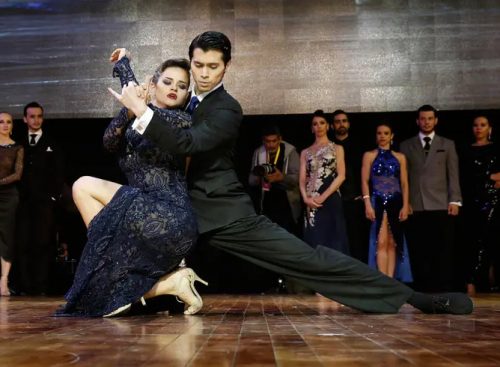
Pareja argentino-japonesa compitiendo en el Mundial de Tango
Tradicionalmente, el tango se realiza a través de una orquesta o cuarteto típico, y el acordeón se considera uno de los instrumentos indispensables. Algunas personas dicen que «bandoneón y tango son lo mismo». Se originó en Alemania y fue adoptado por tangueros a principios del siglo XX para reemplazar la flauta que apareció originalmente y completar el inconfundible sonido del tango. Cátulo Castillo atribuyó «…al bandoneón la definitiva sonoridad de lamento que tiene el tango, su inclinación al quejido, al rezongo». El bandoneón impone al tango en su forma determinada y compleja, integrando la melodía en una base con ritmo y armonía.
Más tarde, a través de la fusión de pianos, el reemplazo de guitarras y el desarrollo de técnicas de tango basadas en la percusión rítmica, se mejoró la complejidad de esta melodía, ritmo y sonido. De esta manera, la base de instrumentos musicales del tango se define como cuarteto de bandoneón, piano, violín y contrabajo (posiblemente con guitarra).
En sus instrumentos se forma una típica orquesta de tango, originalmente inventada por Julio de Caro en la década de 1920, integrada principalmente en forma de cuarteto, y tiene la siguiente fusión: piano, dos bandoneones, dos violines y contrabajo. Hablando estrictamente, la banda de Tango siguió el mismo esquema, expandiendo el grupo de acordeón y agregando viola y violonchelo al grupo de cuerdas.
Las letras están basadas en un idioma local llamado lunfardo y a menudo expresan tristeza, especialmente en «cosas de amor».
Aunque el tango puede aparecer en las letras más o menos con el sonido de lunfardo, se caracteriza precisamente por la postura y el sonido de lunfardo rioplatense, no es solo un idioma compuesto de cientos de palabras propias, sino también (probablemente más esencialmente) un gesto de lenguaje, una forma de hablar algo exagerada (incluyendo comerse las eses), generalmente las personas los reconocerán en todo el mundo, los residentes de Río de la Plata, Argentina y Uruguay están en la costa. El tango es «reo» porque lunfardo «es reo», es decir, es un estilo musical basado en el discurso popular, es la voz de los suburbios, la voz de arrabal.
El lunfardo (como en ningún otro lugar) expresa la fusión migratoria que originó las sociedades rioplatenses, expresada por el tango y es originado en el siglo XIX principalmente por los inmigrantes italianos que eran mayoría, tanto en Buenos Aires como Montevideo, pero contiene también otras influencias, entre ellas palabras, africanas, aimaras, mapuches, judías, gitano-españolas, gallegas, quechuas, árabes, guaraníes, polacas, portuguesas e inglesas, que se mezclan en el uso cotidiano sin conciencia de su origen. Fue en sus orígenes y aún hoy un lenguaje oculto-metafórico construido a partir de una dinámica entre la sociedad carcelaria, los jóvenes y el mundo del trabajo. De cierta forma, al decir, el lunfardo es «una travesura léxica, algo así como un guiño travieso que el habla le hace al idioma»
Recibirás noticias y ofertas de Argentina

